
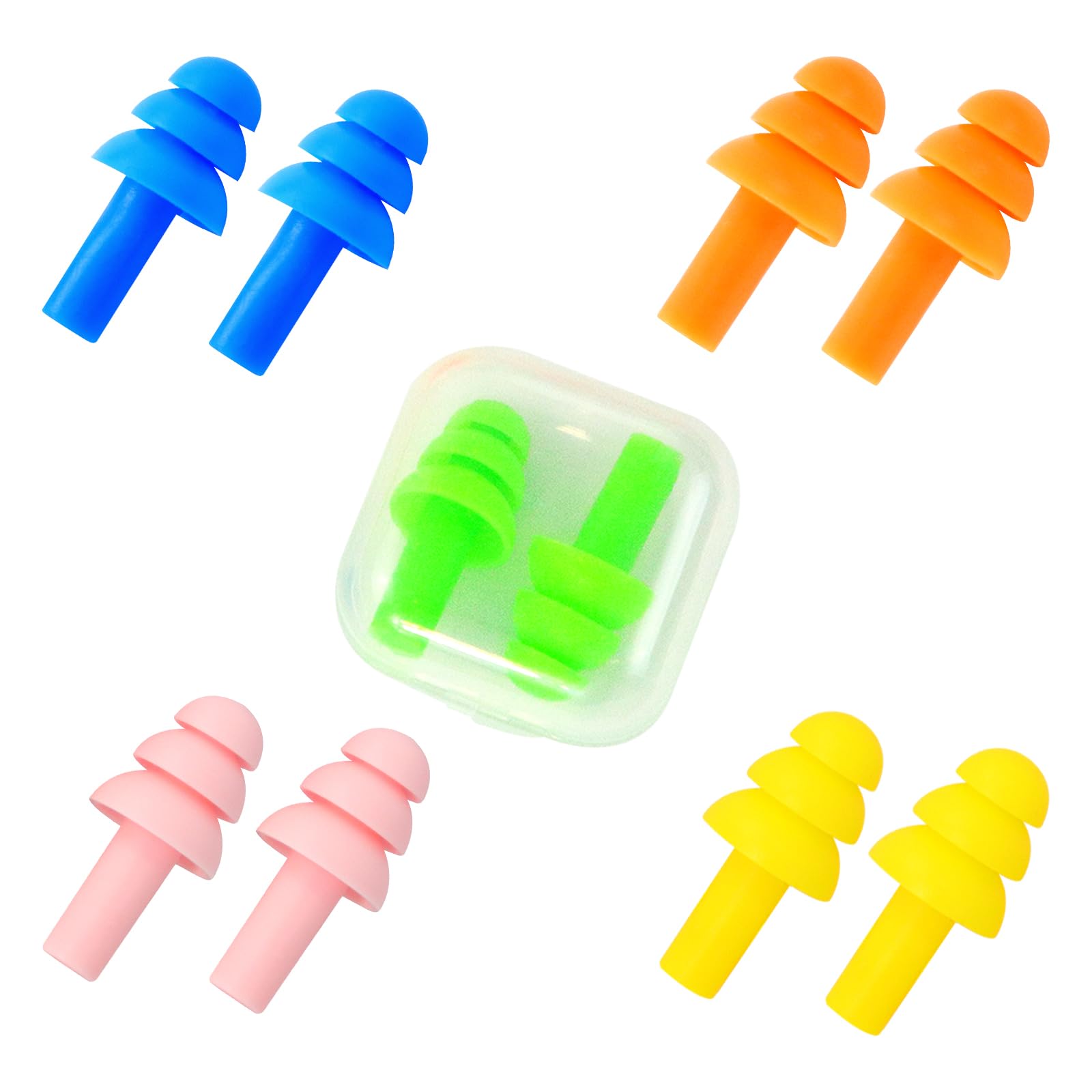
Earplugs
Silence, within reach. 😴🔇
Test Sample: Bouchons d’oreilles
Description
Earplugs: cut out the noise around you and find your calm, wherever you are.
🔇 Effective noise reduction
☁️ Ultra-soft material (foam / silicone) for all-night comfort
😴 Ideal for sleeping, even on your side
🎧 Also for flights, commuting, open-plan offices or revision
♻️ Reusable and easy to clean (depending on model)
🎒 Compact storage case, always with you
In a session. They play a far more precise role than a simple comfort accessory: they take hearing away. Deprived of sound, you lose your bearings in space and time — you no longer hear your partner approaching, nor the movements preparing what comes next. Attention folds back onto what is left: the pressure of the latex, the heat, the breath, the contact. They are as much a multiplier of sensation as a tool of submission, and they combine naturally with the hood and eye cover for complete sensory deprivation.
In practice they go in early in the dressing sequence, before the hood, since they become unreachable afterwards. Under the noise-cancelling headset, the isolation becomes near total.
Precautions. Cutting off hearing removes a channel of communication: stop signals must therefore be visual or tactile, agreed in advance, and the partner does not leave the room. Never force a plug in, avoid extended wear in an ear that is irritated or infected, and take them out at the first discomfort. Beware too of the false sense of safety: not hearing anything does not mean nothing is happening.
Care. Silicone models rinse in lukewarm soapy water and must dry completely before going back in their case. Foam ones have a limited life and should be replaced as soon as they lose their springiness or get dirty.
My take
Les bouchons complètent la privation sensorielle sans le volume d'un casque : plus de repères sonores, et l'attention se replie entièrement sur les sensations du corps.
Leur discrétion est aussi un risque : coupé du son, je n'entends plus une consigne ni une alerte. Ils ne se justifient donc que si les signaux visuels ou tactiles sont déjà convenus. Je les évite quand je dois rester attentif à quelque chose.
Très efficaces et peu encombrants, à réserver aux moments réellement encadrés.